Moissanite Moe · Nov 11, 2026 · 2 min read
Is Moissanite a Real Gemstone?
Yes. Moissanite is a real gemstone made of silicon carbide. It was first found in a meteorite crater in 1893 and is now grown in labs because natural moissanite is extremely rare. It's not a diamond and not fake: it has its own hardness (9.25), more fire than diamond, and passes a standard diamond tester.

Where does moissanite come from?
French scientist Henri Moissan found tiny crystals of it in 1893 in rock from a meteorite crater in Arizona. He first thought they were diamonds. They turned out to be a new mineral, silicon carbide, later named moissanite after him.
Why is it lab-grown?
Natural moissanite is so rare that there isn't enough to make jewelry. Every moissanite stone sold today is lab-grown. That's the same way lab diamonds are made: real material, grown under controlled conditions.
Is lab-grown the same as fake?
No. A fake imitates something it isn't. Moissanite is itself. It doesn't pretend to be a diamond; it's its own gemstone with its own properties.
How does it compare to diamond?
- Hardness: diamond 10, moissanite 9.25. Harder than sapphire and ruby.
- Sparkle: moissanite has more fire (rainbow flashes) than diamond.
- Tester: moissanite passes a standard thermal diamond tester.
- Price: a fraction of diamond.
Full breakdown: Moissanite vs lab diamond vs CZ.
What does VVS mean?
VVS means "very, very slightly included." The stone has inclusions so small they're hard to see even under 10x magnification. To the eye, a VVS stone looks perfectly clear.
FAQ
Is moissanite worth buying?
For jewelry you wear every day, yes. It looks like diamond, lasts for life and costs far less.
Can people tell moissanite isn't diamond?
Most people can't. A jeweler with a dual tester or a loupe can.
Does moissanite hold value?
It's not an investment stone. Buy it to wear, not to resell.
Keep reading
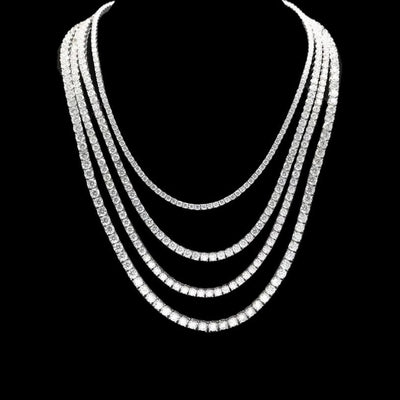 Best Tennis Chain Length for Men: 18 vs 20 vs 22 vs 24 InchFor most men, 20 inches is the best tennis chain length. It sits just below the collarbone and...
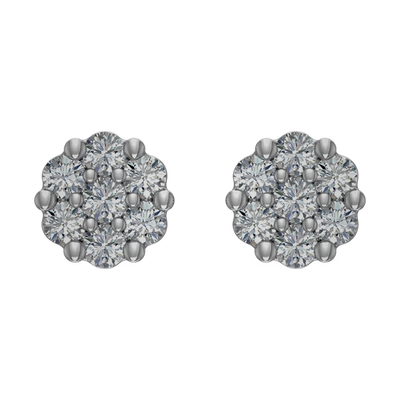 Why Cheap Iced-Out Jewelry Fails the Diamond TesterCheap iced-out jewelry fails the tester because the stones are cubic zirconia (CZ) or glass, not diamond or...
 What Tennis Bracelet Size Should You Get?Measure your wrist snugly with a string or soft tape, then add about half an inch for a...